Maintenance
Spring AC tune-up: when to schedule and what to expect
The ideal window for spring AC tune-ups is April through late May — after frost, before the first heat wave. A real tune-up runs $130-$280 and covers coil cleaning, refrigerant pressures, electrical testing, condensate drain clearing, and a written report. Catching spring failure modes before summer load.
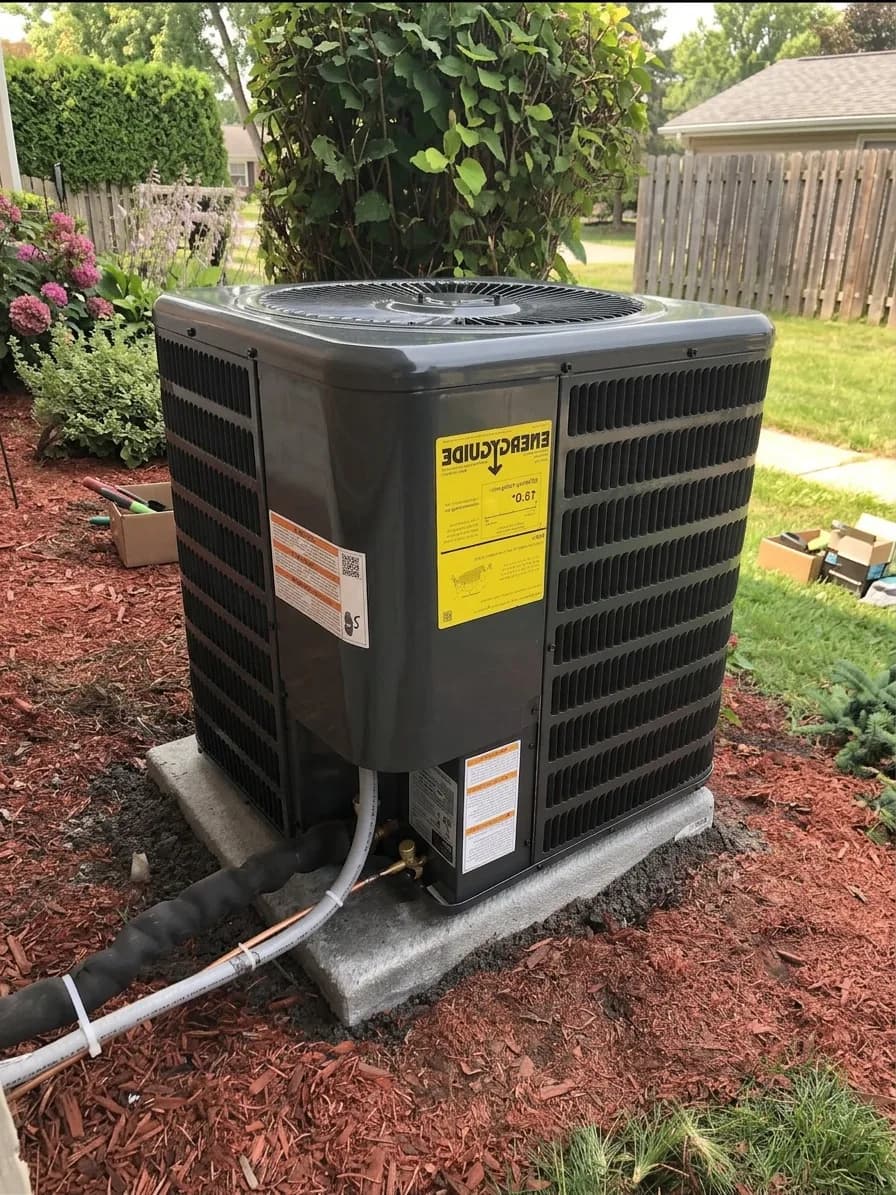
The ideal window for an AC tune-up in Oxford County is April through late May — after the last hard frost, before the first heat wave. Booking in this shoulder season gets you convenient appointment times and catches the typical spring failure points (failed capacitors, dirty coils, drained refrigerant from winter leaks) before the first 28°C day forces the AC to work hard. A real spring tune-up runs $130-$280 in Ontario and covers coil cleaning, refrigerant pressure verification, electrical testing, condensate drain clearing, and a written report. Skipping it doesn't guarantee a failure, but the no-cool calls we run in mid-July are roughly 60% issues that would have shown up at a spring tune-up.
If you haven't touched your AC since last September, this guide walks through when to schedule, what should happen at the visit, the homeowner steps that complement the tune-up, and the failure modes specific to spring that catch homeowners out.
When to schedule
Spring AC tune-ups follow the same shoulder-season logic as fall furnace tune-ups: do it before the system is under real load.
| When | Why |
|---|---|
| April | Ideal — temperatures usually past hard frost, scheduling is open |
| Early May | Still good — most contractors have availability |
| Late May / Early June | Getting busy — book ahead |
| Mid-June through August | Emergency calls only; tune-up slots gone |
Tune-up visits in April are easier to schedule, the AC isn't pressed into service yet so a tech-found issue doesn't leave you without cooling, and ordering parts (if a capacitor or contactor needs replacement) happens with cool-air time still to spare.
Why before-summer matters
The AC has been sitting unused for 6-8 months by the time spring arrives. During that downtime, several things can fail or develop:
- Capacitors degrade. Even when not running, the dielectric in capacitors slowly weakens. A capacitor that ran fine last September may be at 70% capacity by spring and ready to fail under summer load.
- Refrigerant slowly leaks. Small pinhole leaks that weren't bad enough to cause issues last summer may have dropped the charge below operating spec by spring.
- Mice and chipmunks nest. Outdoor units make warm dry shelters during winter. Mice nests in or around the outdoor unit are common spring findings — and chewed wire insulation comes with them.
- Coils accumulate debris. Leaves, dirt, cottonwood seed, and grass clippings settle on the outdoor coil through fall and winter. Restricted airflow means higher head pressure and reduced cooling.
- Condensate drains develop slime. The drain that ran clean all of last cooling season can develop algae or biofilm during the unused months. First time the AC runs in May, the drain doesn't flow and the pan overflows.
A spring tune-up catches all of these before they become breakdowns. Working through them on a planned visit costs $130-$280. Working through them on an emergency call in July adds same-day premium pricing on top of repair cost.
What should happen at a spring AC tune-up
A real tune-up is 60-90 minutes and covers electrical, refrigerant, mechanical, and safety items.
Outdoor unit:
- Visual inspection of the unit, electrical service, refrigerant lines
- Coil cleaning — gentle hose rinse from inside-out plus coil cleaner solution if needed
- Fan blade inspection and balance check
- Capacitor capacitance measurement (compared to nameplate rating)
- Contactor inspection (pitting, arc damage, smooth operation)
- Refrigerant pressure check (superheat and subcooling readings)
- Electrical amperage measurement on the compressor under load
- Wire and connection inspection for corrosion or animal damage
- Disconnect switch test
- Cleaning of any dirt and debris from around the outdoor unit
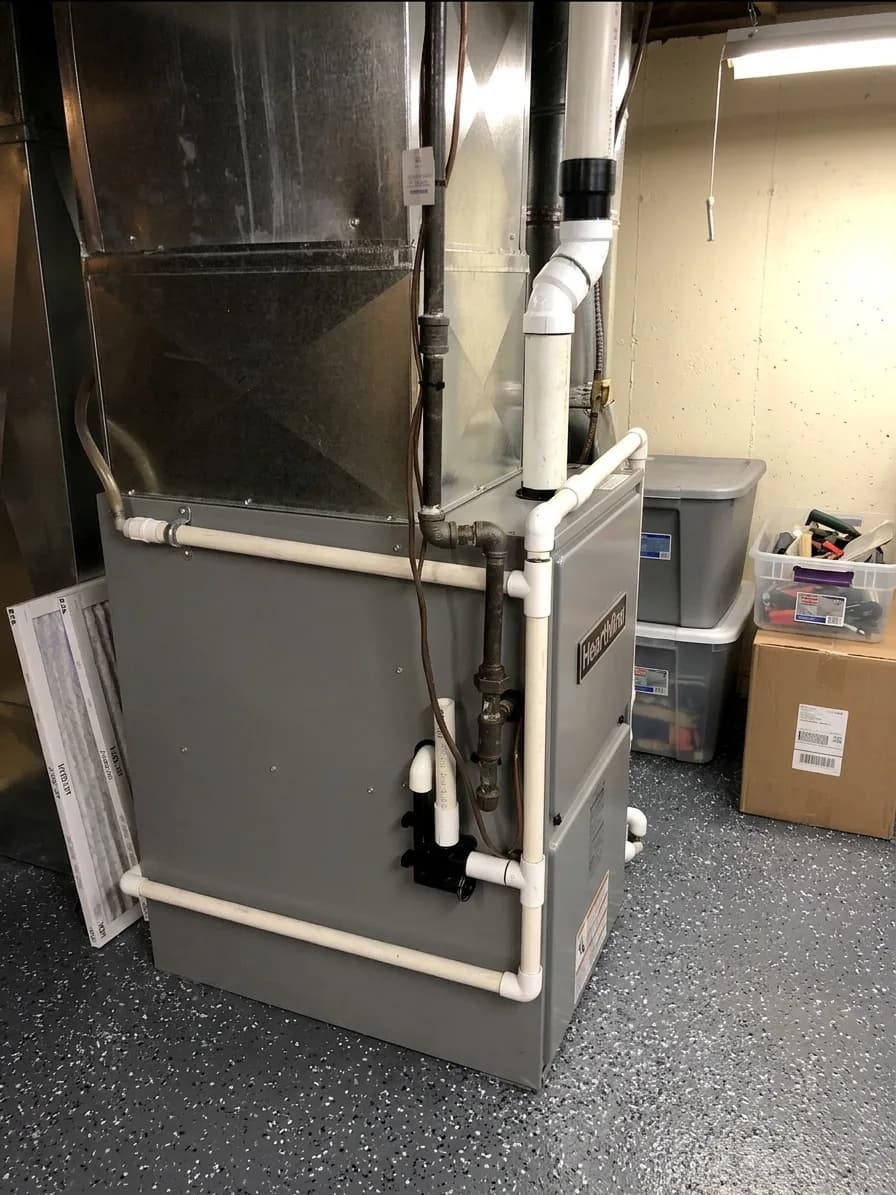
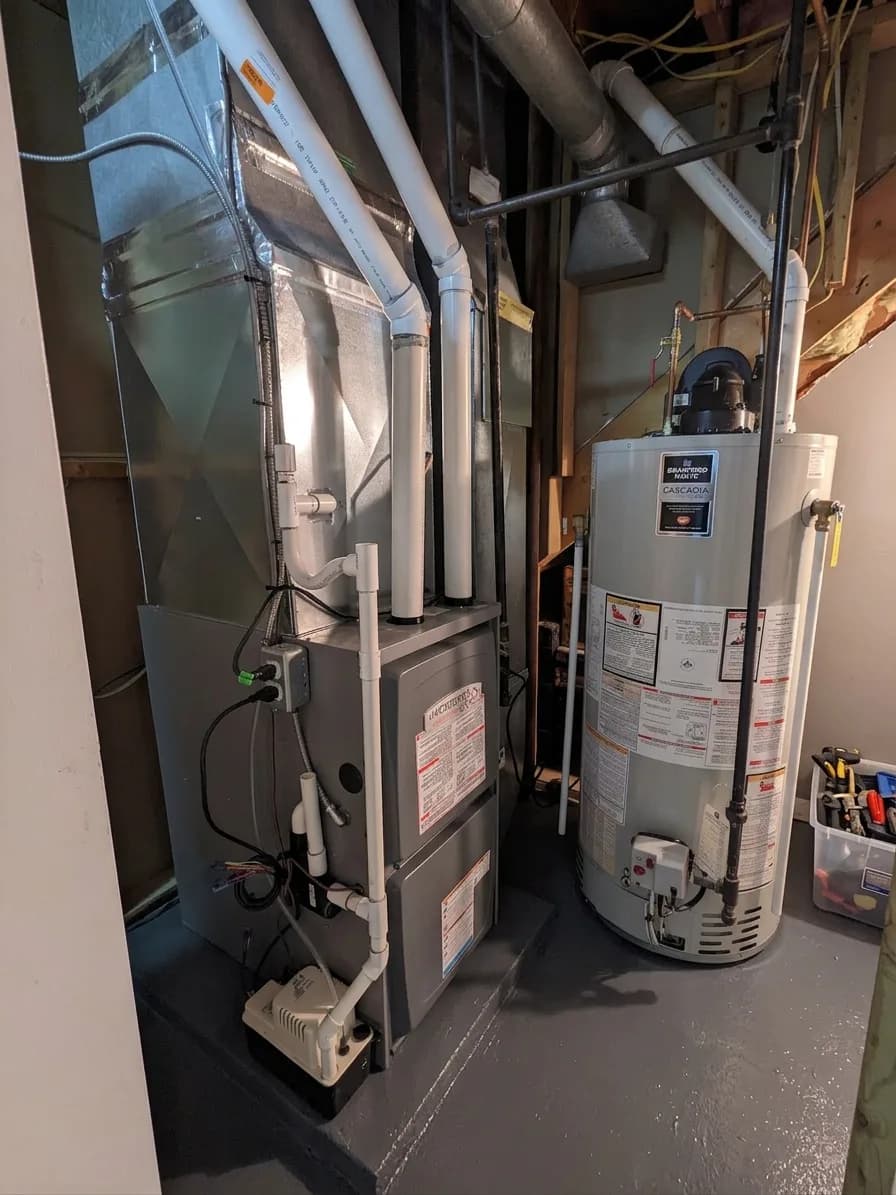
Indoor unit (air handler or furnace, depending on setup):
- Indoor coil inspection and cleaning if needed
- Condensate drain flush
- Condensate pan inspection (clean, no standing water, float switch test)
- Blower wheel inspection
- Filter check (replace if needed)
- Indoor temperature drop measurement (return temp vs supply temp under load)
Whole-system:
- Thermostat operation test
- Refrigerant leak check at accessible joints
- Static pressure measurement (the same one done at furnace tune-up)
- Written report of findings and any recommendations
A 90-minute thorough tune-up hits all 20. A 60-minute "basic" tune-up hits the safety-critical and high-value subset. A 30-minute "$49 special" hits 4 or 5 of them and counts on selling you something else to make the economics work.
Fair pricing for a spring tune-up in Oxford County
A real Ontario spring AC tune-up runs $130-$280 in 2026:
- $130-$180 — 60-minute basic legitimate visit, includes the safety-critical and refrigerant-critical items
- $180-$280 — 90-minute thorough visit, includes all 20 items above plus a detailed written report
- Under $80 — bait-and-switch; the visit happens but a real tune-up can't be performed in the time and price. Walk away.
- Over $400 — overpriced unless serious cleaning is included (coil pull-and-clean, full system flush)
The pricing matches a furnace tune-up — see our furnace tune-up cost in Ontario for the same fairness analysis on the heating side.
What homeowners should do alongside the pro tune-up
Five short tasks complement the professional visit:
1. Clean around the outdoor unit
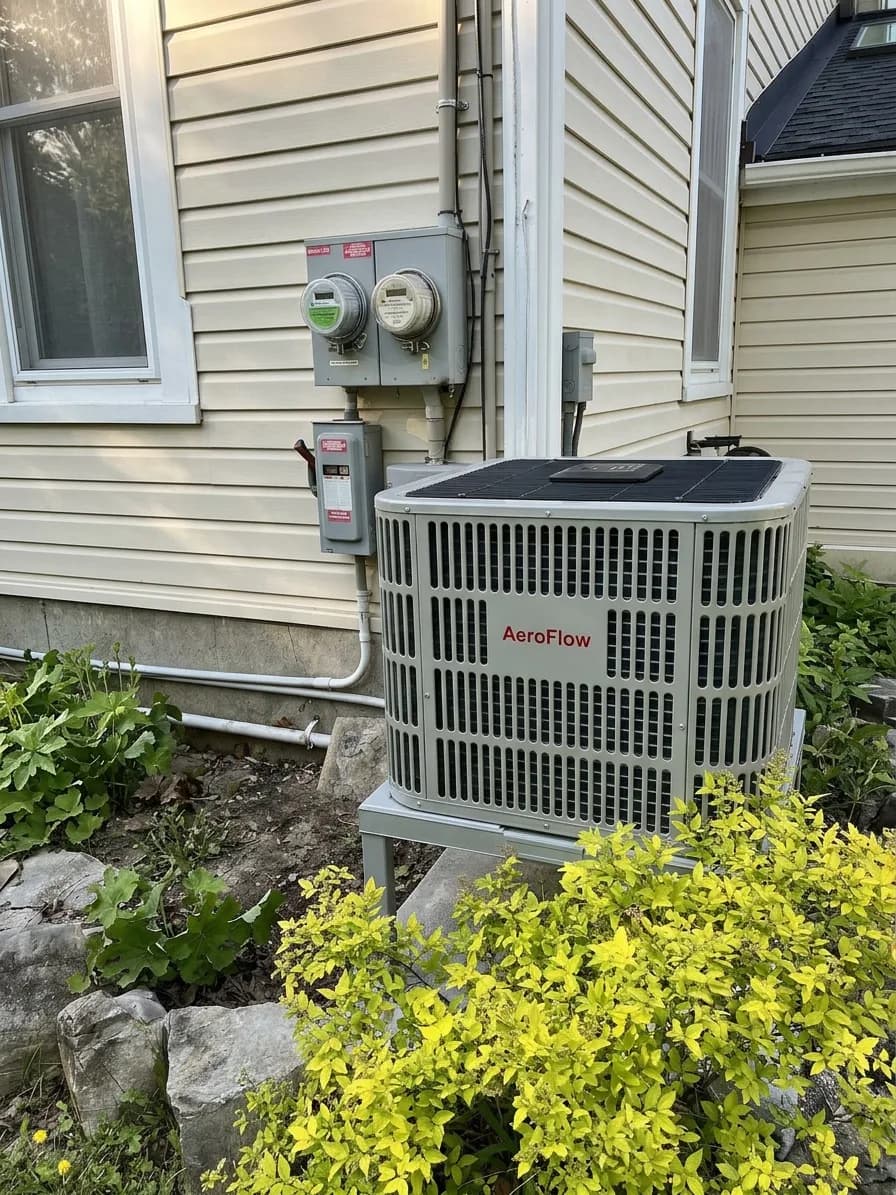
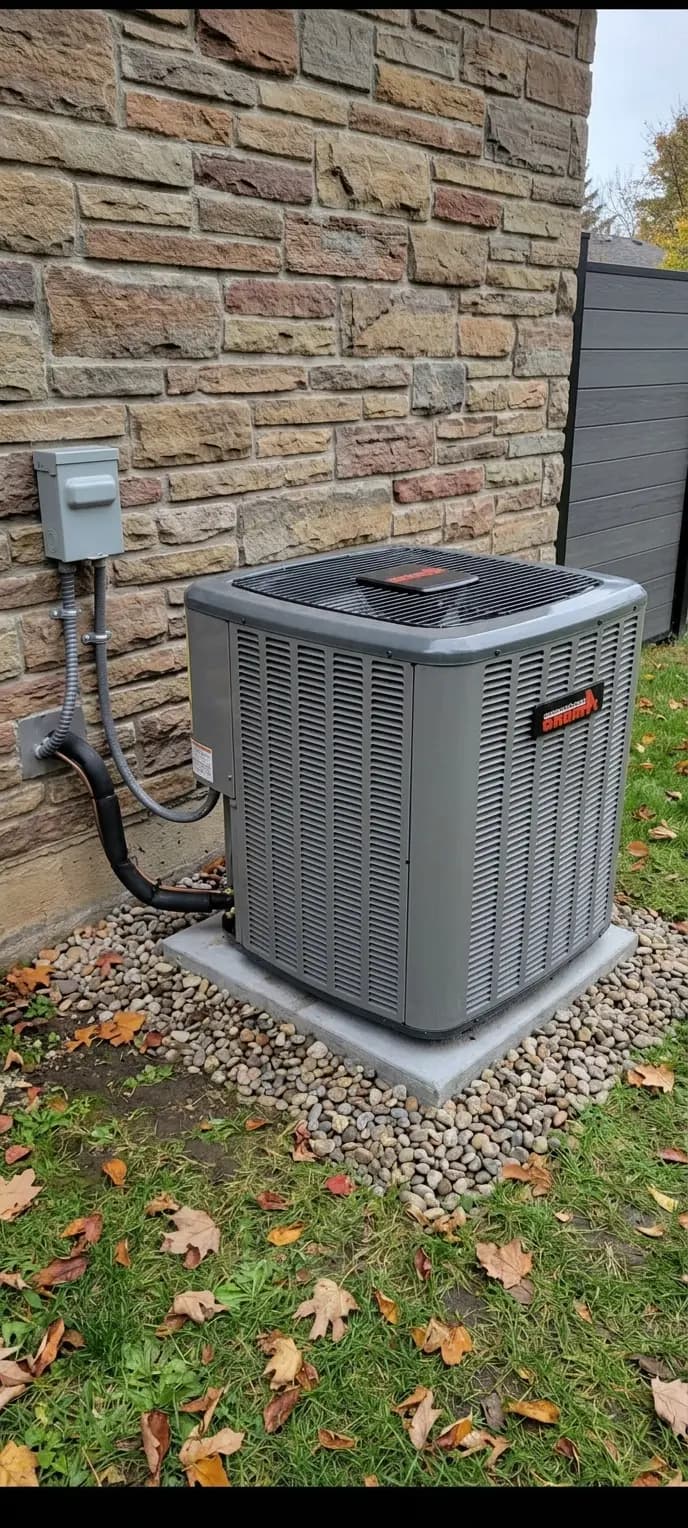
The outdoor condenser needs clear airflow on all sides — at least 60 cm of space recommended.
- Remove leaves, branches, and debris that accumulated through fall and winter
- Trim back any vegetation that's grown within 60 cm
- If you covered the unit for winter, remove the cover before running it (AC covers should not be on when the unit is operating — trapped moisture causes corrosion)
- Hose-rinse the outdoor coil gently from inside-out at low pressure
Don't use a pressure washer on the coil fins. They're soft aluminum and bend easily.
2. Check the disconnect switch
The outdoor unit has a disconnect switch near it — a small box on the wall of the house, typically grey or white, with a pull-out handle or breaker. This is the electrical shut-off for the AC.
- Confirm the disconnect is in the ON position
- Look for visible damage, corrosion, or scorching
- Tighten any loose mounting screws on the box
A bad disconnect causes intermittent AC failures that are hard to diagnose without checking the disconnect first.
3. Vacuum supply and return registers
Six months of dust accumulates in the registers. Vacuum each one — supply vents (where cool air comes out) and return vents (typically larger grilles where air goes back to the furnace).
A heavy dust load on the return grille restricts airflow over the indoor coil, which can freeze the coil in the first heavy-duty cooling day.
4. Replace the filter
If you haven't changed the filter since last spring or fall, replace it now. Same approach as the pre-winter furnace checklist section 1 — pull, hold to light, replace if light doesn't pass.
The same filter the furnace uses is the filter the AC uses. Don't install a fresh filter at fall tune-up and then forget about it through cooling season.
5. Test before the heat wave
Run the system for an hour on a cool day before the first hot day arrives.
- Set the thermostat to COOL mode
- Set the temperature 3°C below current room temperature
- Listen to a full cycle
- Confirm cool air actually comes out of the vents
- Check that the outdoor unit fan spins and the compressor runs
- Look at the indoor coil for any frost or ice formation
If anything sounds wrong, call before the first heat wave. See our AC making loud noise guide for the seven common sounds and what each means, or our AC not cooling troubleshooting guide if it's running but not cooling.
Spring-specific failure modes
Spring tune-ups catch a few failure modes that don't come up in summer because the equipment hasn't been running.
1. Capacitor degraded over winter. Already covered above. The capacitor was fine last September; by spring it's at 70% and degrades the first time the compressor tries to start. Tune-up catches it before the start failure becomes a no-cool call.
2. Refrigerant lost over winter. Small pinhole leaks in copper lines, joints, or service valves slowly drain refrigerant during the off-season. Tune-up measures superheat and subcooling to identify the loss.
3. Animal damage. Mouse or chipmunk nests inside the outdoor unit, sometimes accompanied by chewed wire insulation. Spring tune-up cleans the nest and reports any wire damage for repair.
4. Frozen coil from previous season hidden damage. If the AC froze last summer (plugged filter, low refrigerant), the indoor coil may have developed micro-cracks that don't leak in winter when the system is idle but do leak under spring pressure. Tune-up checks for evidence.
5. Contactor pitted from last season. The contactor wear from last summer's operation may be enough to cause unreliable starts this season. Spring tune-up catches this and replaces before the failure.
Bundling spring AC with other work
If your home has an AC + furnace + air handler setup, the spring tune-up visit can sometimes cover other items if scheduling allows:
- Humidifier shutdown. If you have a whole-home humidifier, the seasonal switch should go to OFF in spring. Some humidifiers also need the bypass damper closed.
- HRV / ERV summer settings. Some HRVs have a summer mode that reduces fan speed. A spring visit can flip this.
- Smart thermostat seasonal review. If you have a smart thermostat (Nest, Ecobee, etc.) the seasonal target temperatures and schedules should be reviewed. See our smart thermostat buying guide for the broader thermostat conversation.
Most of these add 5-15 minutes to the visit and can be done same-trip.
When the spring tune-up turns up a problem
Sometimes the tune-up reveals an issue that needs repair beyond the tune-up scope. The conversation we'll have:
- Small / cheap repairs (capacitor, contactor, condensate drain clear). Usually done at the same visit — $150-$320 added to the tune-up cost.
- Medium repairs (refrigerant top-up after small leak, blower motor). Sometimes done same visit, sometimes scheduled for a return.
- Large repairs (compressor, evaporator coil, full system leak). Quote provided, decision made before repair scheduling.
- End-of-life situation (R-22 system with major leak, very old system with multiple failures). Honest conversation about repair vs replace, see our AC repair vs replace guide and $5,000 rule.
We never push replacement at a tune-up if repair is the better economic answer. The tune-up's job is to surface the truth about the system's condition, not to set up a sales pitch.
What "$49 AC tune-up specials" actually buy
Same answer as the equivalent furnace tune-up specials: a sales pitch dressed up as service. The economics force the tech to recover cost on something — usually:
- A push for a new AC
- An oversold premium air filter
- A system flush or "deep clean" upsell
- A claimed-but-unnecessary refrigerant adjustment
The visit happens but the value isn't real. Skip these. A real tune-up at $130-$280 returns its cost the first time it catches a capacitor before failure.
Common questions
How often should I get my AC serviced?
Annually, before cooling season. Most manufacturer warranties require annual servicing to remain valid. Skipped tune-ups often correlate with mid-summer no-cool emergency calls.
Can I skip the spring tune-up if I had a tune-up last spring?
Not if you want the warranty to stay valid and want to catch the winter-developed issues (capacitors, refrigerant loss, animal damage). The cumulative cost of skipped tune-ups is higher than the tune-up cost itself.
What if my AC seems fine — does it still need a tune-up?
Yes. Most AC issues develop gradually. By the time you notice the AC "isn't cooling well," the underlying problem has been progressing for weeks or months. Tune-ups catch the issues that are too subtle for you to feel but real enough to measure.
How long does a tune-up take?
A real tune-up is 60-90 minutes. Less than that and the tech isn't doing the full work. The 30-minute drive-by "tune-ups" you see in advertised specials are checking a couple of items and selling something else.
Should I do a tune-up if my AC is brand new?
Yes, in its first spring. New AC systems can drift in their first few months — refrigerant charge that was perfect at install in summer can need slight adjustment after the winter idle period. A short tune-up confirms the new equipment is still in spec.
Can I do AC maintenance myself?
Some of it. The homeowner items above (clear debris, vacuum registers, replace filter) are safe. The professional items (refrigerant measurements, electrical testing, capacitor capacitance, combustion-equivalent analysis) require equipment and training.
Are AC + furnace combo tune-ups cheaper than separate visits?
Usually yes, by about 20-30% versus two separate visits. If you book them together (one in spring for AC, one in fall for furnace) most contractors charge less per visit than the standalone price. Annual maintenance plans often bundle both for a single yearly fee.
Does running my AC during a cool spring day damage it?
No — modern ACs are designed for operation in spring conditions. Some older systems require minimum outdoor temperatures (typically above 16°C) before running because oil viscosity in the compressor matters. If your AC is 20+ years old, check the manufacturer's minimum outdoor temperature before running on a cool day.
Ready to book your spring tune-up?
We do thorough 90-minute spring AC tune-ups with refrigerant pressure verification, electrical testing, coil cleaning, and a written report. April and May appointments fill up — booking early gets you convenient time slots.
Request a quote or read more on AC repair service, furnace tune-up cost, and AC not cooling troubleshooting if something goes wrong during cooling season. Service area: Woodstock + 30-minute radius covering Ingersoll, Tillsonburg, Tavistock, Norwich, Embro, Innerkip, Thamesford, Beachville, Salford, Mount Elgin, Burgessville, and Plattsville. Same-day service when scheduling allows.
Common Questions
Frequently asked
When should I schedule a spring AC tune-up in Ontario?
April through late May — after the last hard frost, before the first heat wave. April appointments are easiest to schedule and catch tech-discovered issues with cool-air time still to spare. Late May and June are getting busy. Mid-June through August is emergency-only — tune-up slots are gone.
What's included in a real spring AC tune-up?
A 60-90 minute tune-up covers outdoor unit (coil cleaning, capacitor measurement, contactor inspection, refrigerant pressure check, amperage testing) and indoor unit (coil inspection, condensate drain flush, blower wheel check, filter replacement). Plus whole-system thermostat operation test, leak check at joints, static pressure measurement, and a written report.
How much should a spring AC tune-up cost in Ontario?
$130-$280 in 2026 for a real tune-up. The lower end ($130-$180) covers a 60-minute basic legitimate visit. The higher end ($180-$280) is a thorough 90-minute visit with all 20 standard tune-up items and a written report. Under $80 is usually bait-and-switch.
Why does my AC need spring maintenance after sitting all winter?
Several things can fail during the off-season: capacitors degrade even when not running, small refrigerant leaks slowly drain the charge, mice and chipmunks nest in the outdoor unit (chewing wire insulation), coils accumulate debris, condensate drains develop slime. Catching these in April is cheap and easy; finding them in July under load is more expensive.
Should I cover my AC unit in winter?
A simple cover protecting the top from falling debris is fine. A full wraparound cover traps moisture and accelerates corrosion. If you covered the unit, remove the cover before running the AC — running with a cover on can severely damage the equipment.
Can I do AC tune-up tasks myself?
Some of them. Safe DIY items: clearing debris around the outdoor unit, vacuuming registers, replacing the filter, gentle outdoor coil rinse with a garden hose. Professional-only items: refrigerant pressure measurements, electrical testing, capacitor capacitance, combustion-equivalent analysis. The DIY items complement the tune-up; they don't replace it.