Troubleshooting
AC not blowing cold air? 7 things to check before you call
If your AC is running but not blowing cold air, 5 of the 7 most common causes you can check yourself in under 10 minutes. The checklist we walk Oxford County homeowners through every summer — about a third of no-cooling calls resolve without a service visit.
If your AC is running but not blowing cold air, 5 of the 7 most common causes you can check yourself in under 10 minutes — usually before you call anyone. This is the checklist we walk Woodstock-area homeowners through in July when the heat wave hits and the house won't cool. About a third of "no cooling" calls resolve at one of these steps without needing a service visit.
If it's 32°C outside and your house is climbing past 28°C, work through the checklist quickly, then call. We do same-day service in Woodstock and the close-in towns when scheduling allows — see our AC repair page for what to expect.
Before you call: the 7-step checklist
1. Check the thermostat
It sounds obvious. It catches a lot of "AC not working" calls in summer.
- Is the thermostat set to COOL (not OFF, not HEAT, not FAN ONLY)?
- Is the temperature setting at least 3°C below the current room temperature?
- Did the batteries die? Most thermostats need fresh AAs every 12-18 months. A blank or dim screen is the giveaway.
- Is the fan setting on AUTO, not ON? On ON, the fan blows constantly — including when the compressor isn't cooling — and the air feels warm.
If the screen is blank, replace the batteries first. If the screen is on but the AC isn't responding, move to step 2.
2. Check the air filter
A completely plugged filter is the single most common reason a working AC stops cooling well. The filter starves the system of airflow, the indoor coil ices over, and now you have a frozen block of ice where the heat transfer is supposed to happen.
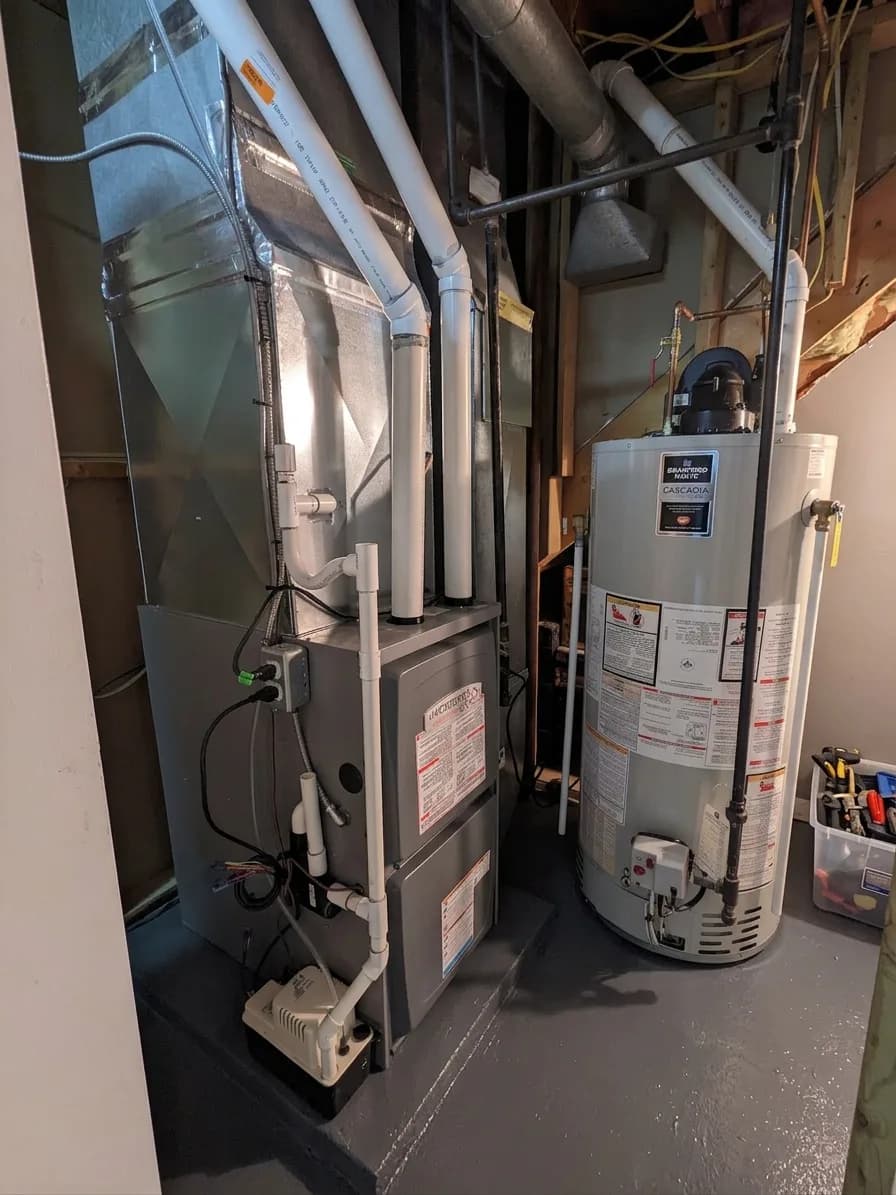
- Find the filter (typically at the cold-air return near the furnace, or inside the furnace door — your AC and furnace share the same air handler)
- Pull it out and hold it up to a light
- If you can't see light through it, replace it (any hardware store carries common sizes — write down the dimensions printed on the frame)
- If the filter is bad enough that the coil iced over, the AC needs to thaw before it can cool again — turn the system to FAN ONLY for 1-3 hours to melt the ice, then switch back to COOL with the new filter in
A neglected filter can shut a working AC down in a single hot week. This catches a meaningful number of "AC not cooling" calls every July.
3. Check the breaker
Your AC has its own breaker in the electrical panel — usually a double-pole breaker for 240V.
- Find the breaker labeled "AC," "A/C," or "Air Conditioner"
- Look for one sitting in the middle position (between ON and OFF) — that's a tripped breaker
- Flip it fully OFF, wait 30 seconds, then flip fully ON
- Wait 5-10 minutes — the AC has a built-in delay before the compressor restarts
If the breaker trips again immediately, stop and call. You have an electrical fault that needs a technician — could be a failing capacitor, a shorted compressor, or wiring.
4. Check the outdoor unit
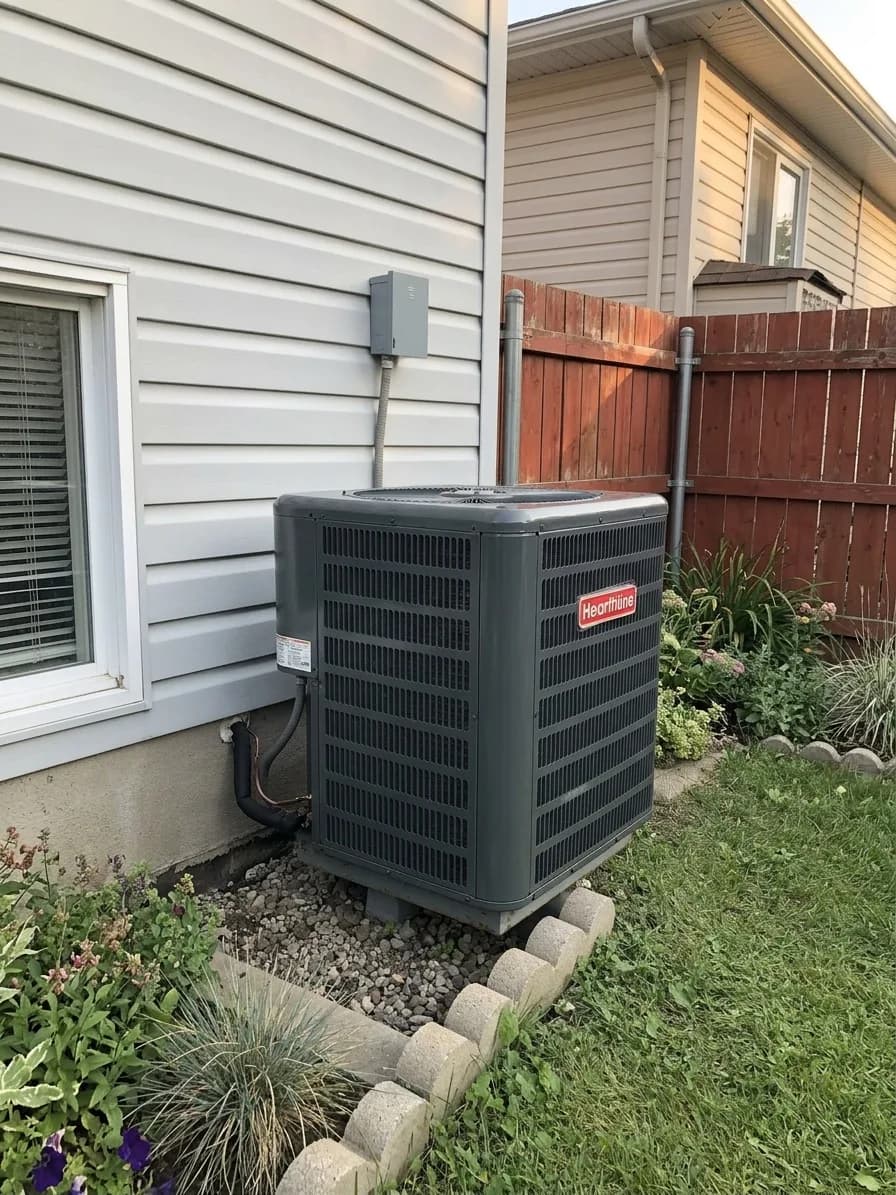
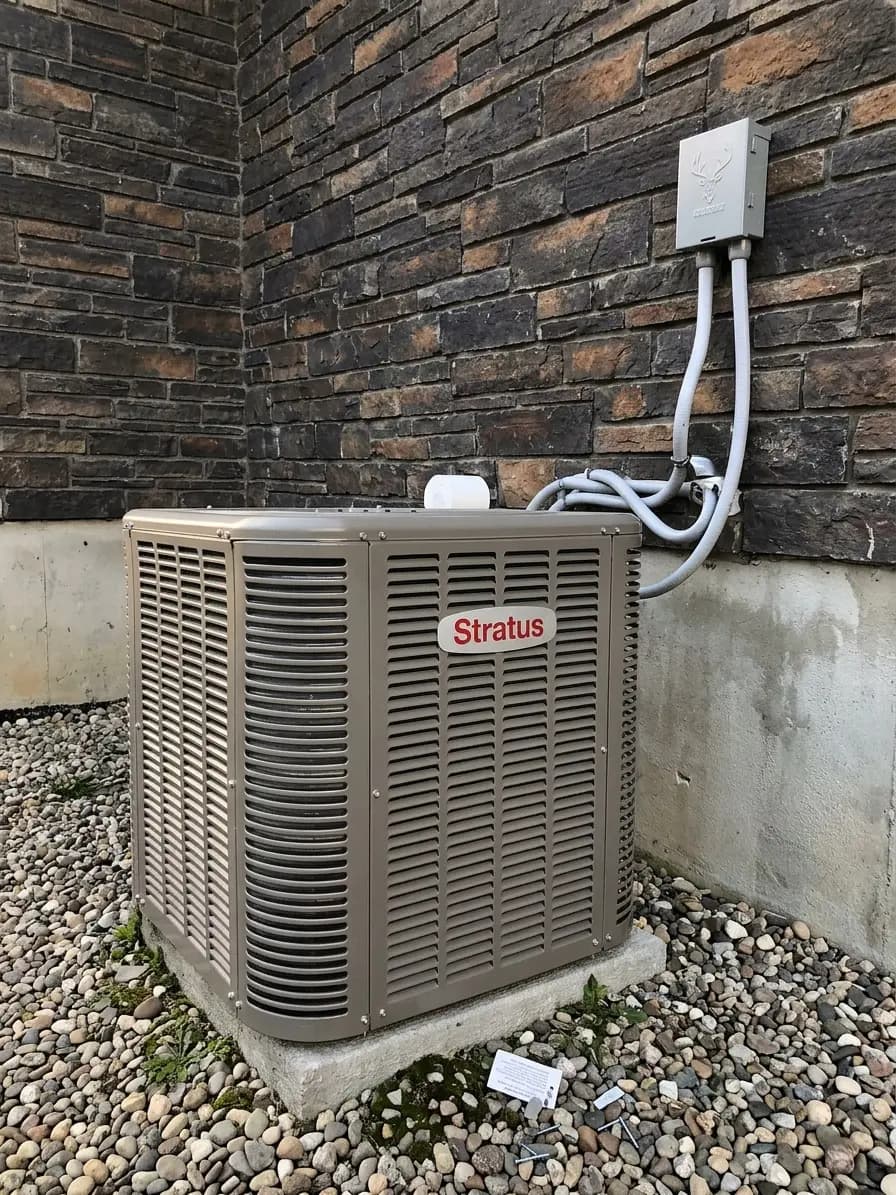
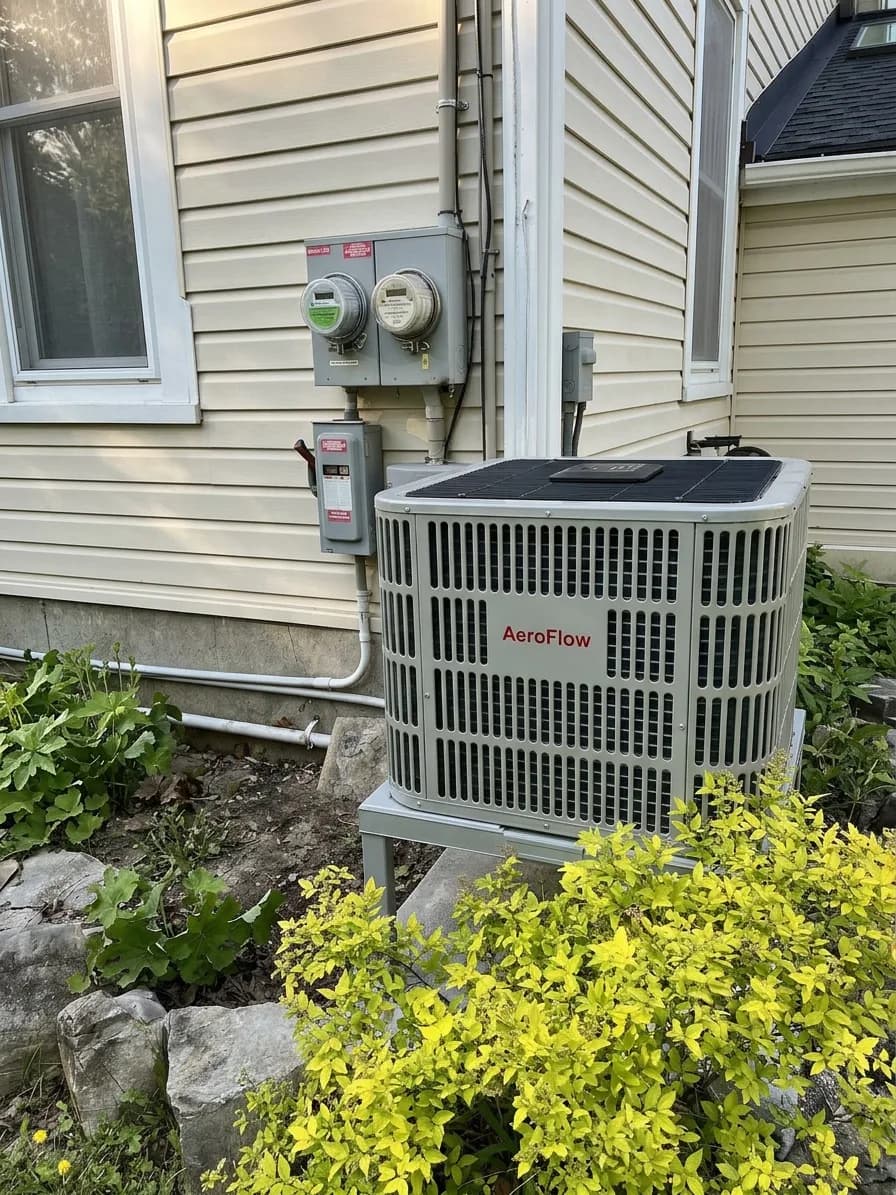
Walk outside to the condenser (the big box with the fan on top).
- Is the fan on top spinning when the system is calling for cooling?
- Are leaves, grass clippings, cottonseed, or dog hair clogging the metal fins on the sides?
- Is the unit level? A unit pitched off level can stress the refrigerant lines and the compressor.
- Is there at least 60 cm of clearance on all sides? Shrubs growing into the coil block airflow.
Gentle rinse with a garden hose from the inside out (you may need to remove the top fan grille — only do this with power off at the breaker) clears most surface debris. Don't use a pressure washer — the fins are soft aluminum and bend easily.
If the fan isn't spinning at all while the system is calling for cooling, you likely have a bad capacitor or contactor. That's a same-day repair for a tech.
5. Check the indoor coil for ice
If the indoor side of the system (above the furnace) has visible ice on the copper lines or the coil, the system is frozen.
- The most common causes are a plugged filter (see step 2) or low refrigerant
- Turn the system to FAN ONLY for 1-3 hours to melt the ice
- Once melted, run the system on COOL with a clean filter and watch — if it ices up again within a day, you likely have a refrigerant leak that needs a tech to diagnose
Refrigerant doesn't "use up" over time. If your system is low, there's a leak somewhere. Topping it up without finding the leak is a temporary fix at best.
6. Check the condensate drain
ACs pull humidity out of the air as they cool, and that water needs to drain somewhere — usually through a plastic tube into a floor drain or condensate pump.
- Find the small plastic tube running from the air handler to a drain
- If the tube is full of stagnant water or the drain pan under the indoor unit has standing water, the drain is clogged
- Many modern systems have a float switch that shuts down the AC when the pan fills up — that's a safety feature, not a fault
A blocked condensate drain is a 15-minute fix for a tech. If you're comfortable, you can disconnect the trap and clear it yourself, but don't try if you're not sure what you're doing.
7. Listen to what the system is actually doing
When you set the thermostat to COOL and drop the temperature, what happens?
- You hear the indoor blower start, the outdoor fan starts, but the air from the vents feels barely cool — usually low refrigerant (leak), a failing compressor, or a plugged indoor coil. Needs a tech.
- The outdoor unit hums but the fan isn't spinning — typically a failed capacitor. Quick repair.
- The outdoor fan spins but the compressor doesn't kick in (no deeper hum) — failing start capacitor, failing contactor, or compressor problem.
- Nothing happens at the outdoor unit at all — could be a thermostat issue (step 1), a breaker (step 3), or a control wire problem.
When to skip the checklist and just call
Stop and call immediately in any of these situations:
- The breaker trips immediately every time you reset it
- You smell burning, or see smoke from the indoor or outdoor unit
- You hear a loud hissing from the refrigerant lines (could be a refrigerant leak)
- The outdoor unit is making a screaming or grinding noise
- Someone in the home is vulnerable to heat (elderly, infants, medical conditions) and the indoor temperature is climbing past 28°C
The most common actual fixes
Of the calls that get past the homeowner checklist and need a service visit, the most common AC fixes are:
-
Capacitor replacement — the run and start capacitors that drive the compressor and fan motors. Capacitors fail more often in summer because they're working hardest in heat. Cheap parts, quick repair.
-
Refrigerant leak diagnosis and repair — refrigerant doesn't deplete over time, so a low-charge system has a leak. We use an electronic leak detector to find it, repair the leak, evacuate the system, and recharge. R-22 systems (pre-2010) are getting prohibitively expensive to service — replacement often makes more sense. See our guide on whether to repair or replace your AC.
-
Contactor replacement — the electromagnetic switch that turns the outdoor unit on and off. Burned contacts are common; replacement is quick.
-
Condensate drain clearing — a 15-minute fix that resolves the float-switch shutdown.
-
Coil cleaning — outdoor coils plug up with debris over years; a deep clean restores capacity that's been slowly bleeding away.
-
Blower motor or capacitor on the indoor unit — when the indoor blower won't spin, no air moves through the system regardless of how well the outdoor unit is working.
-
Compressor failure — the expensive one. On a unit over 10 years old, a failed compressor is usually a replacement conversation, not a repair conversation. The $5,000 rule applies — see the $5,000 rule explainer.
What to have ready when you call
A few details speed up the diagnostic:
- The age of your AC (rough is fine — "around 12 years")
- The make and brand (often printed on the outdoor unit data plate)
- What you've tried from the checklist above
- Whether the refrigerant type is R-22 or R-410A (data plate; R-22 is the older one)
- Whether the indoor coil is iced over right now
- Whether the breaker is tripping repeatedly
After the repair
Once we've fixed whatever's broken, we'll usually recommend:
- A spring AC tune-up — most failures we see in July would have been caught at an April or May tune-up
- Setting a calendar reminder for filter changes — every 1-3 months depending on filter type
- Keeping shrubs and debris back from the outdoor unit
- Watching for early signs of trouble (warm air from vents, ice on lines, longer run times to hit setpoint)
When repair stops making sense
If your AC is over 12-15 years old and you're paying for repairs more than once every couple of years — or the unit runs R-22 refrigerant — it's worth running the repair-vs-replace math. See our $5,000 rule explainer and our AC repair-or-replace decision guide for the full picture.
If you're due for a replacement anyway, the timing matters — bundling an AC replacement with a heat-pump conversion can pull current Ontario rebates into the math. See our heat pump rebate guide for what's live right now.
AC still not cooling?
Request a service call and mention "no cooling" in the message — we'll prioritize. Same-day when scheduling allows. Service area: Woodstock + 30-minute radius covering Ingersoll, Tillsonburg, Tavistock, Norwich, Embro, Innerkip, Thamesford, Beachville, Salford, Mount Elgin, Burgessville, and Plattsville. See AC repair details for what to expect at the visit.
Common Questions
Frequently asked
My AC is running but not cooling. What should I check first?
Start with the thermostat (set to COOL, temperature below current room temp, fan on AUTO not ON). Then check the air filter (replace if plugged — the indoor coil can freeze when airflow is restricted), the breaker (look for one tripped mid-position), the outdoor unit (fan spinning, no debris blocking the coil), and the indoor coil for ice. A plugged filter is the single most common cause of AC not cooling.
Why is my AC blowing warm air instead of cold?
Common causes: thermostat set to FAN ONLY instead of COOL, low refrigerant from a leak, frozen indoor coil from restricted airflow, failed capacitor preventing the compressor from running, or the outdoor unit not coming on. A working AC blower with no compressor produces warm air through the vents.
Why is there ice on my AC lines?
The indoor coil is freezing. Most common causes: plugged air filter (restricts airflow over the coil), low refrigerant (causes the coil temperature to drop below freezing), or dirty indoor coil. Turn the system to FAN ONLY for 1-3 hours to melt the ice, then run COOL with a fresh filter. If ice returns within a day, you have a refrigerant leak that needs a tech.
What's the most common AC repair?
Capacitor replacement. The run and start capacitors that drive the compressor and fan motors fail more often in summer because they work hardest in heat. Cheap parts, quick repair. Next most common: refrigerant leak diagnosis, contactor replacement, and condensate drain clearing.
Should I worry about my AC running R-22 refrigerant?
If it leaks, yes. R-22 has been phased out and is now expensive to replace. A leaking R-22 system is usually more economical to replace entirely than to top up. R-410A systems (installed since around 2010) are still readily available and reasonably priced.
How long does an AC repair take?
Common quick repairs (capacitor, contactor, condensate drain) usually take under 90 minutes. Refrigerant leak repairs can take 2-4 hours including evacuation and recharge. Compressor replacement or major component work can run half a day or require parts ordering.